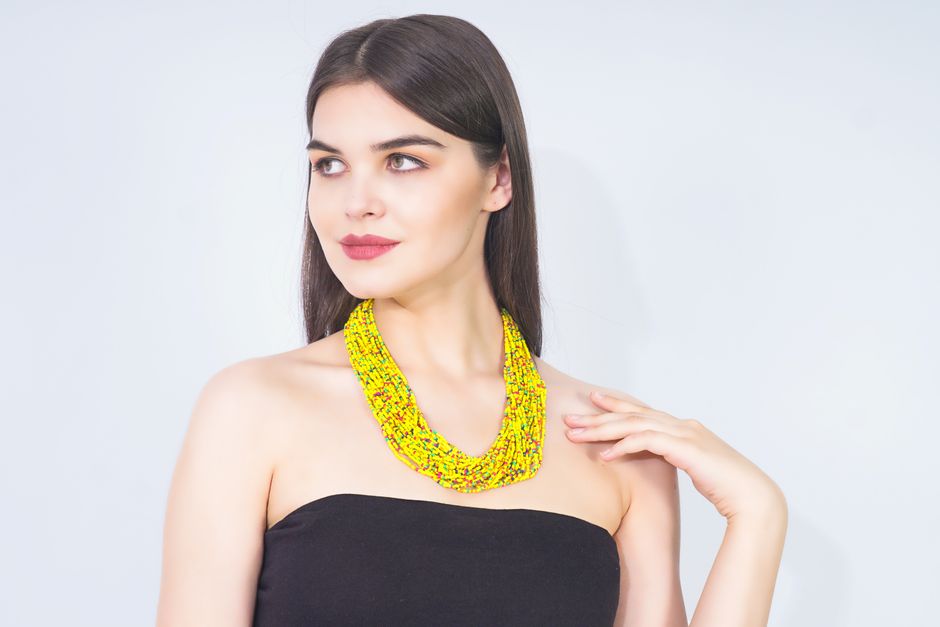
Start with the shape of the top, not the necklace
You are dressed for dinner, your blouse fits well, and the outfit still looks unfinished. Then you add a large necklace. The pendant lands directly on the collar, the chain disappears under the fabric, and the whole look feels crowded. The problem is usually not the jewelry. It is the meeting point between the necklace and the neckline.
Why the neckline controls the result
A statement necklace creates a strong visual center near your face. Your neckline creates another shape in the same area. When those shapes support each other, the outfit looks planned. When they fight, the necklace can make the chest look busy or shorten the space between your chin and shoulders. The best pairing leaves a small, clear gap or lets the necklace echo the line of the garment.
That gives you the first rule: match the necklace shape to the neckline shape. A rounded collar usually works with rounded beads, a bib shape, or a short collar necklace. A V-neck often looks sharper with a pendant, a pointed cluster, or a necklace that follows the V. This is a proportion decision, not a rule about body type.
Use the visual center as your guide
Stand in front of a mirror wearing the exact top or dress you plan to style. Mark the lowest point of the neckline with your finger. The necklace should either sit above that point, finish at it, or continue below it with a deliberate pendant. A random ending halfway across the neckline often looks accidental. For most tops, a necklace that finishes within 1 to 2 inches of the neckline edge gives the cleanest result.
Measure your neckline in three quick steps
Before shopping, take five minutes to measure the clothing you already own. This small step prevents the most common mistake: buying a necklace by its advertised length instead of by where it will actually sit on your body.
Follow this measuring routine
- Put on the top, dress, or bra you will wear under the outfit. Clothing layers change the height of the neckline.
- Use a soft measuring tape to measure from the hollow at the base of your throat to the neckline’s lowest point. Record the distance in inches.
- Measure across the visible neckline from one shoulder line to the other. This shows how much horizontal space the necklace needs to fill.
- Check the necklace length from clasp to end. A 16-inch chain may sit like a choker on one person and like a short collar on another.
- Add the pendant length to the chain length. A 20-inch chain with a 3-inch pendant reaches much lower than a plain 20-inch chain.
- Take a photo in natural light. Look at the image from a normal viewing distance, not with your face close to the mirror.
Keep proportions easy to read
If the neckline is narrow, choose a necklace that stays inside its width. If the neckline spreads toward the shoulders, a wider bib or multi-strand piece can fill the space without looking oversized. A small frame does not automatically require tiny jewelry, and a larger frame does not require the biggest piece available. The useful measurement is the open space around the neck and collarbone.
For a polished first purchase, choose a necklace that is 14 to 18 inches long and has a pendant or focal area between 1.5 and 3 inches wide. That range works with many shirts while still looking like a statement piece.
Use this neckline comparison table before you buy
The fastest way to choose is to compare the garment’s line with the necklace’s line. Use the table as a shopping filter, then make a final mirror check with the actual fabric.
Neckline and necklace pairings
| Neckline | Best necklace shape | Useful length | Skip this mistake |
|---|---|---|---|
| V-neck | Pointed pendant or V-shaped cluster | 18 to 24 inches | A round bib that ends across the V |
| Crew neck | Short bib, collar, or rounded pendant | 16 to 20 inches | A long chain with no focal point |
| Scoop neck | Curved bib or layered strands | 18 to 22 inches | A sharp pendant that sits above the curve |
| Boat neck | Long pendant or narrow vertical chain | 24 to 30 inches | A wide necklace that repeats the shoulder line |
| Square neck | Geometric collar or angular pendant | 16 to 20 inches | A very soft, tiny chain with no weight |
| Turtleneck | Long pendant, lariat, or bold chain | 24 to 32 inches | A tight necklace competing with the collar |
Read the space around the neckline
A table cannot account for every fabric. A thick knit needs more visual weight than a thin silk blouse. A high-contrast print needs a simpler necklace, while a plain black top can support stronger color or texture. Keep one element dominant. If the necklace has large stones, several layers, or a wide bib, let the top provide a quiet background.
The clear winner for a first statement necklace is a medium-width piece with an adjustable extender. It gives you more control over where the focal point lands and works across crew, scoop, and open shirt necklines.
Choose one standout piece and build around it
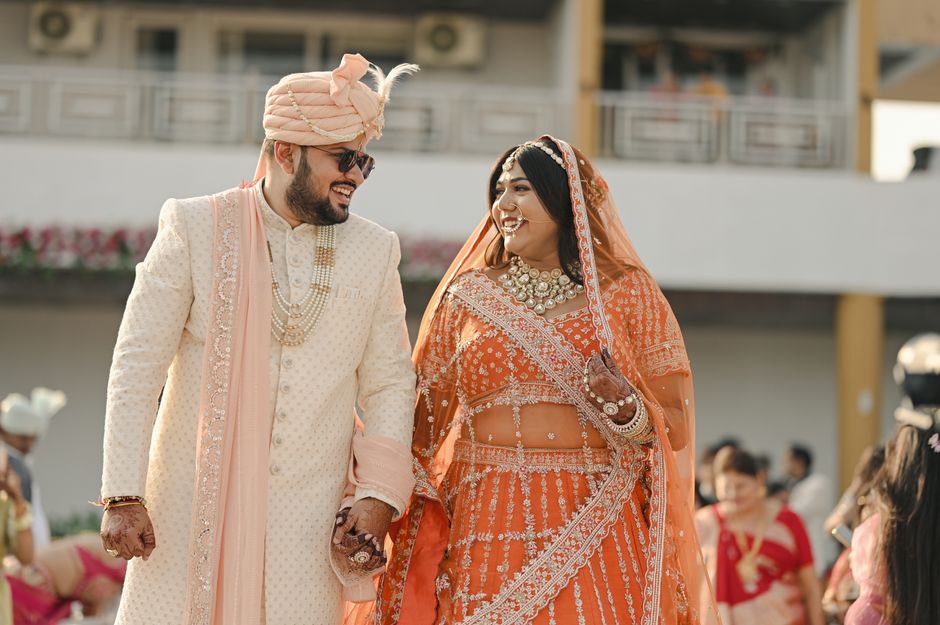
A statement necklace should be the loudest accessory in the outfit. Start with that decision, then make the rest of the styling quieter. This keeps the necklace visible and makes the outfit look intentional instead of overworked.
Three real necklace styles to compare
The Kendra Scott Elisa Pendant Necklace, often priced near $70, is the safest choice for a V-neck or open button-down because its single oval pendant creates a clean vertical line. It is noticeable without covering the entire neckline. For a stronger look, the BaubleBar statement necklace range, often around $68 to $98, offers wider bib and crystal designs that suit a plain crew neck or simple sheath dress. Pick the shorter bib styles for a high, rounded collar.
For a modern outfit, the Madewell Chunky Chain Necklace, commonly listed near $59.50, gives a bold shape without adding color. It works best with a scoop neck, open blazer, or crisp shirt. The tradeoff is weight: a chunky chain can feel tiring after several hours, so check the clasp and total metal weight before wearing it to an event. The Anthropologie Beaded Bib Necklace range, often around $78 to $98, is the better choice when a plain top needs color and texture, but it should not compete with a patterned dress.
Set the supporting accessories
Use earrings that repeat one detail from the necklace, such as its metal color or stone tone. Small hoops or simple studs usually work better than large chandelier earrings. Keep the bracelet slim if the necklace has several layers. A watch is fine, but avoid stacking multiple bangles that pull attention away from the face.
For a work outfit, the Kendra Scott pendant is the strongest pick. For an evening dress with a bare or simple neckline, choose the BaubleBar bib. For jeans, a shirt, and a blazer, the Madewell chain gives the clearest modern result.
Answer the neckline questions shoppers ask most
Can I wear a statement necklace with a button-down shirt?
Yes. Open the shirt to the second or third button and place the necklace inside the opening. A pendant between 18 and 24 inches usually fills that space. If you button the shirt to the collar, choose a short collar necklace instead. The necklace should not wedge under the top button or sit directly on the collar points.
What necklace works with a strapless dress?
Choose a collar, bib, or short pendant that follows the width of the neckline. A 16 to 18-inch piece usually keeps the focus high and leaves the shoulders visible. A very long necklace can pull the eye down and make the upper half of the dress look empty. For a straight strapless neckline, a geometric piece gives stronger contrast than a delicate round chain.
Should the necklace match the color of my outfit?
It should relate to the outfit, but it does not need to match exactly. Gold stands out against black, navy, cream, and warm brown. Silver looks crisp with white, gray, cobalt, and cool green. Bright beads can echo one color in a print. If the clothes already have several colors, choose a metal-only necklace and let its shape create the interest.
Can I wear a statement necklace with a high neckline?
Yes, but use length instead of crowding. A 24 to 32-inch pendant or lariat sits over the fabric and creates a vertical line. A short necklace placed on top of a turtleneck often looks compressed. If the fabric is thick, test the clasp and pendant while moving your arms; the necklace should stay centered.
Avoid these five necklace mistakes
The right necklace can still fail if the fit, weight, or styling is wrong. Check these points before removing the tag.
Common problems to catch in the mirror
- Matching only the color: Gold jewelry may coordinate with a blouse but still fight a sharp square neckline. Check shape first, then color.
- Ignoring the fabric: Heavy beads can pull a thin knit downward and leave marks on silk. Use a lighter piece for delicate fabric.
- Choosing a length from a product page: Chain length does not show where the pendant will land. Add the pendant length and measure from your throat.
- Repeating the neckline too literally: A V-shaped necklace with a deep V top can create one long, empty point. A rounded pendant may give better contrast.
- Adding too many loud accessories: Large earrings, a wide necklace, and a stack of bangles create three competing centers. Remove one before adding another.
Know when not to buy the necklace
Skip a piece that twists, scratches your skin, or forces you to adjust it every few minutes. Also skip a necklace that only works with one garment unless you are buying it for a specific event. The best value comes from a design you can wear with at least three necklines and two levels of formality.
My firm rule is simple: if the necklace looks attractive by itself but makes your top harder to read, leave it behind. The outfit is the goal.
Make the final choice with a five-minute outfit test
Lay the necklace on the top, try it on, and take one photo. If the pendant lands in the open space, the scale feels balanced, and you can move comfortably, buy it. If the necklace hides the neckline or creates a second competing shape, choose a different length or silhouette.
Use the three-outfit test
Before committing, style the necklace with three outfits: the neckline you first imagined, a plain top you already own, and one dress or jacket. It passes when the necklace remains visible in all three looks without requiring a new pair of earrings or shoes. This test also reveals if the piece is too formal for your normal wardrobe.
Return to the original dinner outfit
Imagine the opening problem again: the blouse fits, but the outfit feels unfinished. Measure its neckline, select the shape that follows or balances that line, and keep the other accessories small. A medium pendant for a V-neck, a short bib for a crew neck, or a long lariat for a turtleneck will give the outfit a clear visual center. That is the perfect statement necklace: not the largest one, but the one that makes the whole neckline look deliberate.