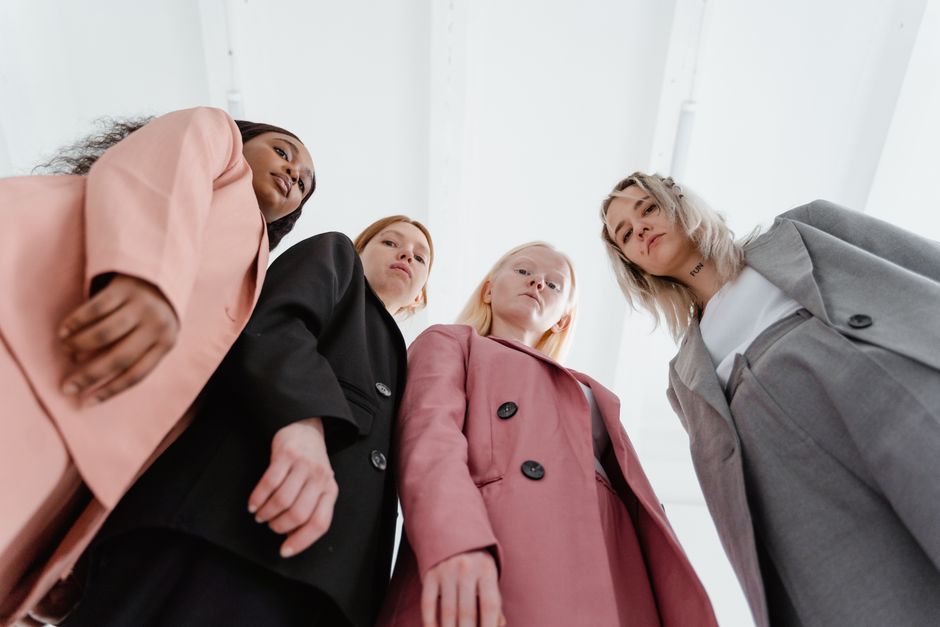
In 2026, searches for “oversized blazer outfit” jumped 340% on Pinterest. But walk down any major street, and you’ll see the same mistake: women wearing blazers that look like they grabbed the wrong hanger at a thrift store. The shoulders droop past their elbows. The hem hits mid-thigh. The fabric bunches at the waist. It doesn’t look cool. It looks sloppy.
The difference between “intentionally oversized” and “accidentally wrong” comes down to six specific decisions. Here’s what those decisions look like in 2026.
1. The Shoulder Drop Rule: Why 2 Inches Works and 4 Inches Fails
Most people think oversized means “buy three sizes up.” That’s how you get a blazer that overwhelms your frame. The real rule is simpler: the shoulder seam should sit 1.5 to 2.5 inches past your natural shoulder bone. Anything beyond that, and the blazer starts wearing you instead of the other way around.
Test this in a store: put the blazer on, cross your arms. If the fabric pulls tight across your upper back, the shoulders are too narrow. If you can pinch more than 3 inches of fabric at the shoulder cap, it’s too wide. The Uniqlo Oversized Blazer ($79.90) hits this sweet spot consistently — structured enough in the shoulder to hold its shape, loose enough to layer a hoodie underneath.
What to look for in the mirror
The side profile tells the truth. A good oversized blazer should have a straight line from shoulder to hem when you stand normally. If you see fabric buckling or pulling forward, the fit is off. If the blazer flares out at the hips like a bell, it’s too tight through the ribcage.
Brands that get this right: COS (the Relaxed Fit Blazer, $175) and Stüssy (the Double-Breasted Blazer, $198). Both cut their oversized silhouettes with narrower armholes, so you don’t get that “batwing” effect when you lift your arms.
2. The Hem Length Math: Where to Cut It Off
This is the single most common failure point. An oversized blazer that hits at mid-thigh makes your legs look shorter. One that hits at upper-thigh (just below the hip bone) elongates your silhouette. The difference is about 4 inches.
The ideal length: the hem should land between your hip bone and the top of your thigh. That’s roughly 2-3 inches below your crotch seam on jeans. Any longer, and you’re back in 2014 boyfriend-blazer territory. Any shorter, and it’s just a regular blazer that’s too big.
A quick fix for blazers you already own: take it to a tailor. Shortening the hem on a blazer costs $25-$40 at most dry cleaners. It changes the entire silhouette. I’ve done this with a thrifted Zara blazer ($12 at Goodwill, $30 for alterations) and it now gets more compliments than my $400 Theory blazer.
3. The 3-Item Capsule That Always Works
You don’t need a closet full of options. Three specific pieces turn an oversized blazer into a streetwear outfit every time.
| Item | Why It Works | Price Range |
|---|---|---|
| White boxy t-shirt (Uniqlo U Crew Neck, $19.90) | Creates a clean base that doesn’t compete with the blazer’s volume | $15-$35 |
| Straight-leg or wide-leg jeans (Levi’s 501, $98) | Balances the top-heavy silhouette; skinny jeans make the blazer look costume-y | $60-$150 |
| Flat sneakers or lug-sole loafers (Adidas Samba, $100) | Keeps the outfit grounded and casual; heels push it into “trying too hard” territory | $80-$200 |
The one exception: if you’re 5’2″ or shorter, swap the wide-leg jeans for a straight-leg crop (like the Levi’s Wedgie Fit, $98). The cropped hem shows ankle, which prevents the oversized blazer from swallowing you whole.
4. Fabric Failure Modes — 3 Materials to Avoid
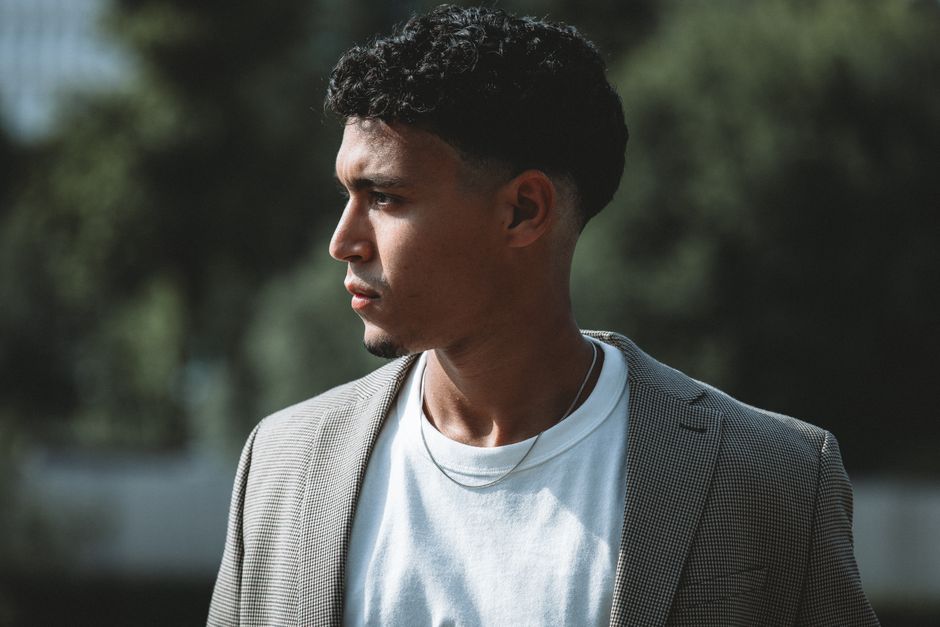
Not all oversized blazers are created equal. The fabric determines whether you look intentionally cool or like you’re wearing a costume. Here are the three materials that fail most often.
Stiff cotton twill
Think Carhartt jacket material. It doesn’t drape. It stands away from your body like cardboard. An oversized blazer in stiff twill creates a box shape that flatters nobody. Avoid unless you’re going for a literal menswear-cosplay look.
Thick wool without lining
Unlined wool blazers are heavy. They pull down at the shoulders and create wrinkles at the elbows. They also trap heat. A lined wool blazer (like the COS Wool-Blend Blazer, $195) drapes better and breathes more because the lining lets it slide over your layers instead of sticking.
Ultra-thin polyester
Cheap polyester blazers wrinkle instantly and cling to static. The oversized silhouette depends on structure; flimsy fabric collapses. A $30 fast-fashion blazer in thin polyester will look exactly like what it is. Spend at least $80-$100 for a blazer with a decent poly-viscose blend that has some weight.
The best fabric for 2026: a mid-weight linen-cotton blend (55% linen, 45% cotton). It has enough body to hold the oversized shape, but enough drape to move with you. The Mango Linen Blazer ($89.99) is the current gold standard at this price point.
5. The Layering Math That Actually Works
An oversized blazer is a shell. What you put under it determines the vibe. Three specific layers work, and one doesn’t.
Works: a hoodie. A thin hoodie (like the Champion Reverse Weave, $70) under an oversized blazer is the 2026 uniform. The hood adds volume at the neck, which balances the wide shoulders. Tuck the hoodie’s drawstrings inside the blazer so they don’t dangle weirdly.
Works: a cropped knit tank. A ribbed tank that ends at your natural waist (like the Skims Fits Everybody Tank, $32) creates a sliver of skin between the tank hem and your pants waistband. The blazer covers everything above. This works best with high-waisted trousers.
Works: a thin turtleneck. A Uniqlo Heattech turtleneck ($39.90) under a blazer is the easiest way to make the outfit feel intentional. The turtleneck fills the neck gap that a t-shirt leaves open. It also adds texture contrast against a smooth blazer fabric.
Doesn’t work: a bulky sweater. A thick cable-knit or oversized crewneck under an oversized blazer creates two competing volumes. You end up looking like the Michelin Man. If you need warmth, use a thin merino wool layer (like the Uniqlo Merino Crew Neck, $39.90) instead.
6. When NOT to Wear an Oversized Blazer
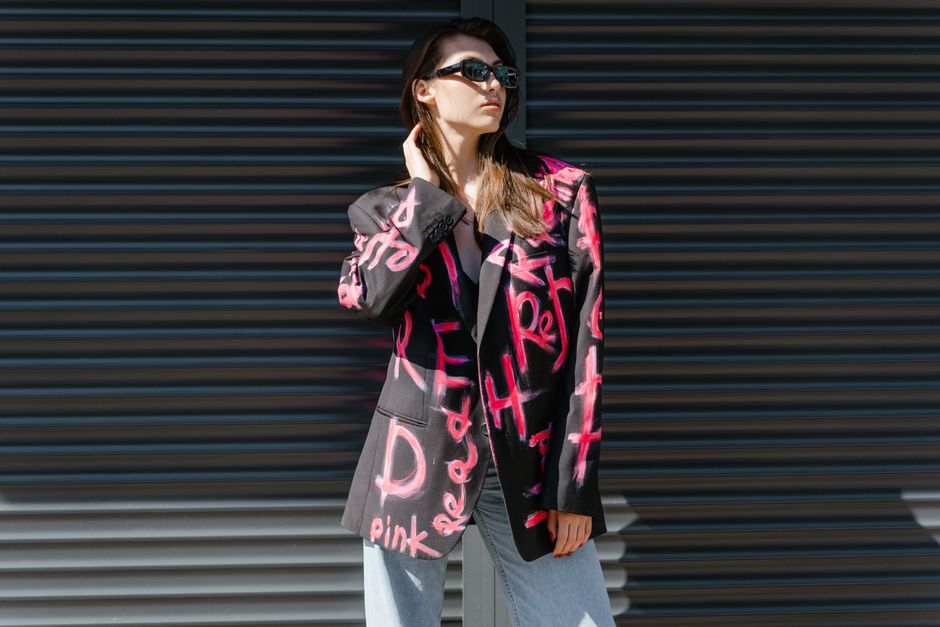
This is the part most style guides skip. An oversized blazer is not a universal garment. Three situations where you should wear something else.
Formal events. A job interview, a wedding, a funeral. Oversized blazers read as casual, even when they’re made of nice fabric. You need a fitted or tailored blazer for these. The loose silhouette communicates “I don’t care” when the context demands “I made an effort.”
Hot weather (above 85°F). Even a linen oversized blazer traps heat. The extra fabric creates a microclimate around your torso. You’ll sweat through your shirt in 20 minutes. Wear a structured vest or a shirt jacket instead.
If you’re under 5’0″. Petite frames get swallowed by oversized cuts. The proportions don’t scale down well. A cropped blazer (hitting at the natural waist) gives you the same streetwear energy without the drowning effect. Look at the Aritzia Wilfred Only Blazer ($198) in a cropped fit — it’s designed for shorter torsos.
The single most important takeaway: an oversized blazer works when every other piece in your outfit is deliberately simple — one statement piece, everything else plays support.