
Warm boots are not automatically safe boots. A thick lining can keep your toes comfortable while a smooth rubber sole sends you sliding across a parking lot. That is the mistake most shoppers make: they judge winter footwear by insulation first and grip second.
For icy conditions, the outsole is the first decision. Then come fit, waterproofing, insulation, and the shape of the boot. A stylish pair that fails any of those tests will spend most of the season in your closet.
Start With Grip, Not Warmth
Why soft rubber works better on ice
Ice is slick because it creates a thin layer of water between your foot and the surface. Very hard plastic-like rubber tends to skate over that film. A softer rubber compound can deform slightly and create more contact with uneven ice. That does not make any boot slip-proof, but it gives you a better starting point.
Look for an outsole described as rubber rather than a fashion sole made mainly from molded plastic. Deep lugs help in snow, but depth alone does not guarantee grip on a frozen sidewalk. The rubber compound and lug spacing matter just as much.
Read the tread pattern before buying
Choose a sole with many contact points, flexible edges, and multidirectional lugs. Small siping cuts can help the tread bend around a slick surface. A heel with a defined edge also gives you more control when walking downhill or stepping off a curb.
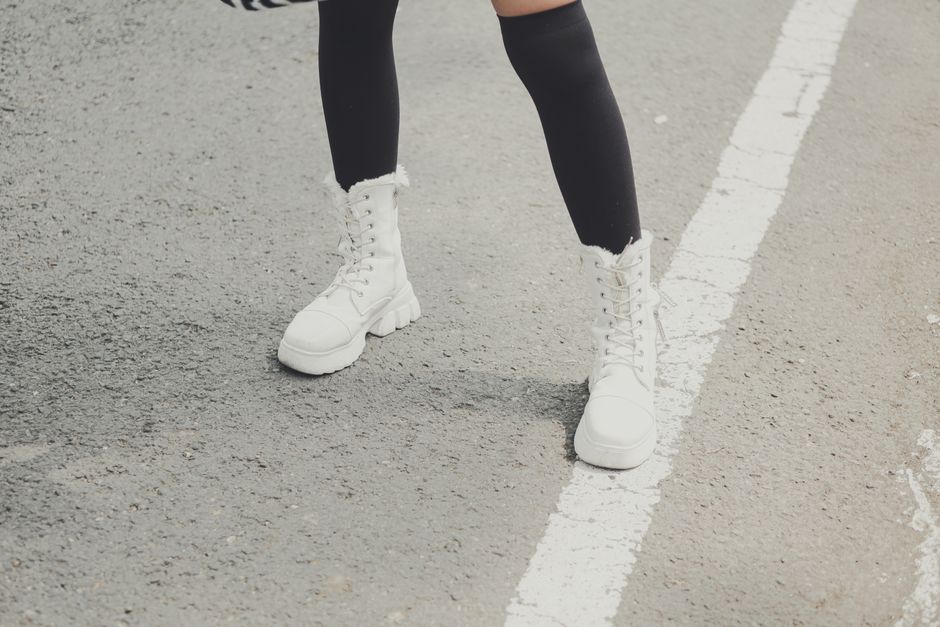
A shallow, flat sole may look sleek with straight-leg trousers, but it is the wrong choice for regular ice. For everyday city walking, pick traction over a slim silhouette. You can still get a clean-looking boot; it just needs a serious outsole underneath.
Verdict: If the sole feels stiff and slippery on a store floor, reject the boot before checking its fur lining.
Match the Boot to the Ice You Face

For polished city sidewalks
City ice is often the hardest kind to handle. Snow melts, refreezes, and creates thin transparent patches around crosswalks, train stations, and building entrances. You need a flexible sole with dense tread and a stable heel. A tall platform is a poor choice because it raises your center of gravity and makes a small misstep harder to correct.
Choose a low or moderate heel, a wide enough base, and an ankle shaft that keeps your foot from rolling. A rounded toe gives your toes room to spread inside the boot, which helps balance. Pointed fashion boots look sharp, but they squeeze the front of the foot and reduce control.
For deep snow and slush
Deep snow calls for more than tread. The boot should have a sealed or gusseted tongue, waterproof upper materials, and a shaft tall enough to stop snow entering over the collar. A waterproof membrane helps in wet slush, while rubber around the lower foot protects leather and fabric from soaked snow.
Do not buy a heavy expedition-style boot for short walks between a car and an office. It can overheat your feet, feel clumsy on stairs, and take longer to dry. For regular commuting, a lighter waterproof boot with dependable tread is the better answer. For long outdoor exposure, choose insulation and shaft height over a polished appearance.
Verdict: Thin city ice demands flexibility and contact; deep snow demands coverage and water protection. Treat them as different footwear problems.
Use This Five-Minute Fit Check
Try winter boots with the socks you will actually wear. Testing them in thin dress socks gives you the wrong answer.
Check the toe box and instep
- Put on medium-weight wool or synthetic winter socks.
- Stand up and slide your toes forward until they touch the front.
- Check that you can fit one finger behind your heel.
- Wiggle every toe. They should move without pressing against the sides.
- Bend your knee and walk downstairs. Your toes should not hit the front.
You need space, but not a loose interior. Extra room lets warm air circulate, while a boot that is too tight compresses the sock and reduces insulation. Tight boots also create pressure points that become painful after twenty minutes outside.
Test the heel and ankle
Your heel should lift slightly when you walk, but it should not slide more than a few millimeters. Excess movement causes blisters and makes the boot harder to control on a slick surface. Lace the boot firmly across the ankle, then leave the forefoot comfortable.
Walk on a hard store floor, turn sharply, and step up and down. If your foot shifts inside the boot during those movements, the shape is wrong for you. Do not assume thick socks will solve the problem. They often make a tight boot tighter and a loose boot less stable.
Best fit rule: choose the smallest size that leaves toe room, heel control, and enough space for your real winter socks.
Five Boots That Get the Basics Right

Product names matter here because “winter boot” covers everything from a lightly lined fashion shoe to a serious snow boot. These are useful benchmarks for judging construction and price. Retail pricing changes, so treat the figures as common manufacturer suggested prices rather than permanent offers.
The strongest options by use case
| Boot | Typical price | Best use | Useful details |
|---|---|---|---|
| Columbia Ice Maiden II | $100 | Daily city wear | Waterproof construction, 200 g insulation, rubber outsole |
| Merrell Thermo Chill Mid Waterproof | $150 | Snowy commutes | Waterproof membrane, 200 g insulation, 5 mm lugs |
| Sorel Joan of Arctic | $240 | Wet snow and style | Removable liner, waterproof leather and textile upper |
| The North Face Chilkat V 400 II | $170 | Very cold weather | 400 g insulation, waterproof leather, winter-grip rubber |
| Salomon Toundra Pro CS WP | $200 | Long outdoor exposure | High insulation rating, waterproof upper, aggressive outsole |
My clear picks
The Columbia Ice Maiden II is the best value for short city walks because it combines moderate insulation, waterproofing, and a manageable price. The Merrell Thermo Chill Mid Waterproof is the better choice for people who walk through regular snow and want deeper lugs without wearing a bulky expedition boot.
For fashion-first shoppers who still face wet snow, choose the Sorel Joan of Arctic. Its removable liner makes drying easier, but its height and weight are excessive for mild winters. For very low temperatures, the The North Face Chilkat V 400 II wins because its 400 g insulation gives you more warmth than the lighter city models. For long walks outside, the Salomon Toundra Pro CS WP is the serious option. It looks more technical, and that is exactly why it performs better.
My Strongest Advice: Add Traction When Needed
No winter boot should be called ice-proof. Even the best rubber outsole can lose grip on smooth black ice. If you regularly walk on untreated paths, buy traction cleats that fit over the boot. That small addition is more useful than paying extra for decorative fur or a taller shaft.
When overshoes beat a new pair of boots
Traction covers make sense when your current boots are warm, waterproof, and comfortable but weak on ice. Look for metal studs or carbide tips, a secure heel strap, and a size that stays tight around the outsole. Remove them indoors. Metal tips can damage floors and become dangerous on smooth tile.
Do not wear aggressive cleats for ordinary pavement all day. They feel awkward, wear quickly, and can catch on stairs. Keep them in your bag for the icy part of the route. This is the best solution for commuters who move between sidewalks, public transport, and indoor spaces.
Common buying mistakes
- Buying a smooth fashion sole because the upper looks more polished.
- Sizing down to stop heel lift, then losing toe space and warmth.
- Choosing heavy insulation for a mild climate and ending up with sweaty feet.
- Assuming waterproof leather will stay waterproof without seam care.
- Ignoring the heel shape, especially a narrow raised heel on slick streets.
- Wearing cotton socks that hold moisture against the skin.
Verdict: If ice is part of your daily route, traction cleats plus a comfortable waterproof boot beat a single expensive boot marketed with vague winter language.
Winter Boot Questions, Answered
Are taller winter boots safer on ice?
Not by themselves. A taller shaft protects against snow entering from above and supports the ankle, but it does nothing for a smooth outsole. A tall boot with poor tread is still a poor ice boot. Pick height for snow depth, then judge safety by the sole, heel, fit, and flexibility.
Is 200 g insulation enough for winter?
For many city commutes, yes. A 200 g boot can work well when you are walking for thirty to sixty minutes in ordinary winter temperatures, especially with wool socks and enough toe room. Choose 400 g insulation or more for long periods outdoors, very cold climates, or people whose feet get cold quickly. More insulation is not always better if your feet sweat during indoor wear.
Should I choose leather or synthetic boots?
Choose treated leather when you want a structured, polished look and do not mind regular conditioning. Choose synthetic materials when you want lower weight, faster drying, and easier care. The waterproof membrane and seam construction matter more than the label on the upper. For a fashion wardrobe that includes skirts, trousers, and casual denim, the Columbia Ice Maiden II offers the most flexible balance. For severe cold, accept a more technical look and buy the North Face Chilkat V 400 II or Salomon Toundra Pro CS WP.
The right pair is the one that gives you controlled steps, dry feet, and enough room to stay warm. Start at the sole. Everything else comes after that.