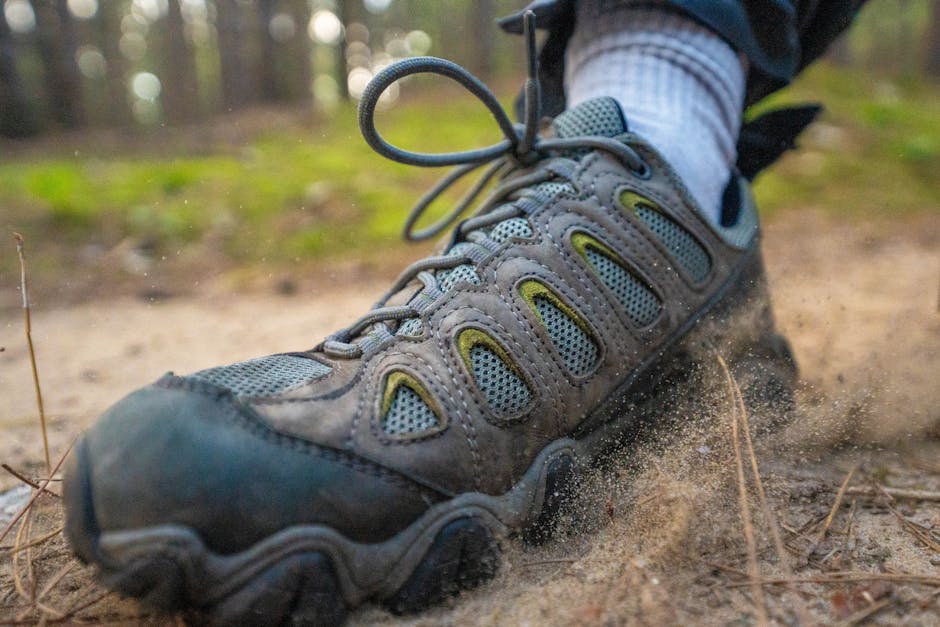
Most hiking boots are garbage. There, I said it. We spend $200 on these stiff, heavy, over-engineered leather tanks because some guy in a green vest told us we need “ankle support,” but the reality is usually much more painful. I spent the better part of a decade convinced that if my feet didn’t feel like they were encased in structural concrete, I was doing it wrong. I was an idiot.
Back in 2026, I decided to hike Mount Marcy in the Adirondacks. It was July, humid as a locker room, and I was wearing a pair of classic, heavy-duty Limmer boots. I’d spent months “breaking them in,” which is just a fancy way of saying I was slowly letting the leather win a war against my heels. By mile eight, my feet weren’t just sore—they were vibrating. I had blisters the size of quarters on both heels. I remember sitting on a rock near the summit, peeling back a damp wool sock, and genuinely wondering if I could just call a helicopter to fly me off the mountain because the thought of walking back down was nauseating. I didn’t call the helicopter. I hiked down in my camp sandals like a loser. It took three weeks for my skin to grow back.
The ankle support myth is a lie
I know people will disagree with me on this, and honestly, I might be wrong about the biomechanics, but I’ve come to believe that “ankle support” in a boot is a total marketing scam. Unless you have a pre-existing medical condition or you’re carrying a 60-pound external frame pack from the 70s, you don’t need a high-top boot. In fact, I think they make you weaker. By bracing the ankle so aggressively, you stop using the tiny stabilizer muscles that are supposed to do that job. It’s like wearing a neck brace to prevent a stiff neck. It’s overkill.
What I mean is—actually, let me put it differently. Your feet are designed to move. When you lock them into a rigid boot, that energy has to go somewhere, and it usually goes straight into your knees. I switched to trail runners three years ago and my chronic knee pain disappeared almost overnight. It turns out that being able to actually feel the ground helps you not trip over it. Who knew?
Anyway, I ended up eating an entire bag of dried mangoes at the summit of Marcy just to feel something other than the fire in my feet. (The mangoes were the only good part of that day.) But I digress. The point is that the “best” boot is often not a boot at all.
Why I genuinely hate the Merrell Moab

I’m going to get heat for this because it’s the best-selling hiking shoe in the world, but I can’t stand the Merrell Moab. It is the “Live, Laugh, Love” of the hiking world. It’s fundamentally uninspired. It’s bulky, it looks like an orthopedic shoe for someone who has given up on aesthetic joy, and the foam goes flat after about 150 miles. I’ve seen more blown-out Moabs on the Appalachian Trail than I’ve seen actual wildlife.
I refuse to recommend them even though everyone else does. They feel like wearing two angry bricks strapped to your shins. If you want a budget shoe, fine, buy them on sale at a warehouse club. But don’t pretend they’re high-performance gear. They’re suburban dog-walking shoes masquerading as mountain equipment.
Total garbage.
The 340-mile rule and the cost of light feet
If you decide to go the lightweight route—which you should—you have to accept that you are entering a subscription model for your footwear. Leather boots last a decade. Trail runners last a season. I’ve kept a spreadsheet (I know, I’m that person) of my last four pairs of Altra Lone Peaks.
- Pair 1 (Lone Peak 4.5): 312 miles before the lugs were smooth.
- Pair 2 (Lone Peak 5): 365 miles before the side blew out.
- Pair 3 (Lone Peak 6): 328 miles.
- Pair 4 (Lone Peak 7): Currently at 210 miles and looking shaky.
The average lifespan is about 340 miles. At $150 a pop, that’s roughly 44 cents per mile. It’s expensive to be comfortable. But I’d rather pay 44 cents a mile than spend another afternoon peeling my own skin off a wool sock in the woods.
If your shoes last five years, they are probably too stiff to be comfortable.
Gore-Tex is a plastic bag for your sweat
Here is another take that people hate: Waterproofing is usually a mistake. Unless you are hiking in literal snow or sustained freezing rain, “waterproof” membranes like Gore-Tex are just sweat-traps. Once water gets inside a waterproof boot—and it *will* get in, either over the top or through the tongue—it stays there forever. It becomes a portable swamp for your foot.
I much prefer a non-waterproof mesh shoe. If I step in a creek, my shoe is soaked for twenty minutes, and then it dries out as I walk. A Gore-Tex boot stays wet for three days. I tested this once in the White Mountains; my friend in waterproof Salomons had wet feet for the entire 3-day loop, while my Altras were dry by lunchtime every day. It’s not even a contest.
The only exception is if you’re doing serious winter hiking. Then, sure, keep the moisture out. But for a summer hike in Virginia or a trek in the desert? You’re just steaming your feet like dim sum.
What I actually suggest you buy
I’m not a pro, but I’ve put enough miles in to know what doesn’t suck. If you want to ignore everything I said about trail runners and you absolutely must have a “boot,” look at the Salomon X Ultra 4 Mid. It’s a compromise. It’s basically a sneaker with a high top. It has 4.2mm lugs which are aggressive enough for mud but don’t feel like soccer cleats on rock.
If you want to join the light side, get the Altra Lone Peak or the Hoka Speedgoat. The Hokas have a stack height that makes you feel like you’re walking on marshmallows, which is great until you realize you’re three inches taller and your center of gravity is weird. It takes a week to get used to.
One more thing: Buy the Darn Tough socks. The ones with the full cushion. I don’t care if they cost $25 a pair. They have a lifetime warranty. I’ve returned three pairs with holes in them and they just send you new ones, no questions asked. It’s the only honest deal left in the outdoor industry.
I still have those old leather Limmers in the back of my closet. They’re beautiful, honestly. The leather has this deep, rich patina and they smell like pine pitch and memories. I look at them sometimes before I head out to the trailhead, then I reach past them and grab my beat-up, dusty trail runners instead. I wonder if I’ll ever be “tough” enough to wear them again, or if I’ve just finally admitted that I value my comfort more than the image of being a rugged mountain man. I think it’s the latter.
Go light. Your knees will thank me in ten years.