Why Linen Still Works After Summer
The common mistake is treating linen as a summer-only fabric. I wore my lightest linen dresses through September and October long before I learned how much the surrounding layers matter.
Linen regulates temperature better than it looks
Linen feels cool because its loose weave lets air move through the fabric. That same breathability helps on mild fall afternoons when a heavy sweater would feel excessive. The issue is not the fiber. The issue is pairing a breezy dress with bare sandals, beach colors, and nothing else that signals the season.
Fall styling works when you keep the dress as the light layer and add warmth at the neck, legs, feet, or shoulders. You do not need to cover every inch of skin.
Change the supporting colors
Color does more seasonal work than fabric. A white or pale flax dress can look autumn-ready with oxblood shoes, dark brown leather, olive green, charcoal, or deep navy. Rust, espresso, and muted mustard also make natural linen feel less like vacation clothing.
My verdict: keep the linen dress if the cut still fits your life, but retire the summer accessories first. Boots and a darker outer layer can change the message of the same dress in five minutes.
Choose the Right Linen Dress Base

Not every linen dress makes a good fall foundation. I look for enough structure to hold a sweater, jacket, or boot without collapsing into a pile of fabric. A clean shoulder line and a hem that does not drag matter more than the exact linen percentage.
| Dress feature | Best fall pairing | What to avoid |
|---|---|---|
| Sleeveless midi with a defined waist | Fine turtleneck, tights, ankle boots | Bulky sweater underneath |
| Button-front shirt dress | Long coat, belt, tall boots | Too many loose layers |
| Loose tiered maxi | Cropped jacket and slim boots | Long cardigan over the full skirt |
| Mini dress with a straight shape | Opaque tights and knee-high boots | Bare legs in cold weather |
Check the volume before adding layers
A wide linen dress already has visual movement. Add one fitted layer under it or one cropped layer over it. Two oversized pieces usually erase the waist and make the outfit look accidental. For a loose maxi, the best outer layer ends near the high hip or natural waist.
Use the hem as a temperature tool
Midi dresses are the easiest fall transition because they cover more leg without hiding the shoe. Mini dresses need tights, while maxi dresses need a visible boot or a shorter jacket to keep the outfit from looking heavy.
My verdict: a structured midi is the most useful linen dress for fall. It gives you more outfit options than a very loose maxi or a barely-there sundress.
Add Warmth Under the Dress First
My strongest fall-linen rule is simple: add the first warm layer underneath before buying another jacket. This keeps the dress visible and prevents the top half of the outfit from becoming bulky.
Use a close-fitting base
For a sleeveless dress, wear a thin crew neck or mock neck in black, cream, charcoal, or chocolate brown. The fabric should sit close to the arms and torso. Ribbed cotton works for mild weather; merino works when mornings drop below 55 degrees Fahrenheit.
The UNIQLO HEATTECH Crew Neck Long-Sleeve T-Shirt, often listed around $19.90, is useful under a low-volume linen dress because the neckline stays flat and the fabric does not add much width. I prefer a matte finish over shiny athletic fabric, which can make linen look mismatched.
Layer a shirt only when the dress has room
A crisp white shirt under a square-neck or pinafore-style linen dress creates a sharper outfit, but it needs space at the armhole. If the dress pulls across the chest or cuts into the shoulder, skip the shirt. A thin turtleneck is the better choice because it takes up less room.
Keep the underlayer slightly darker than the dress when you want a longer line. Match it to the shoe when you want the outfit to look more grounded.
My verdict: a fitted dark base layer beats a bulky sweater under linen. It adds warmth while preserving the dress shape.
Use Jackets to Change the Silhouette
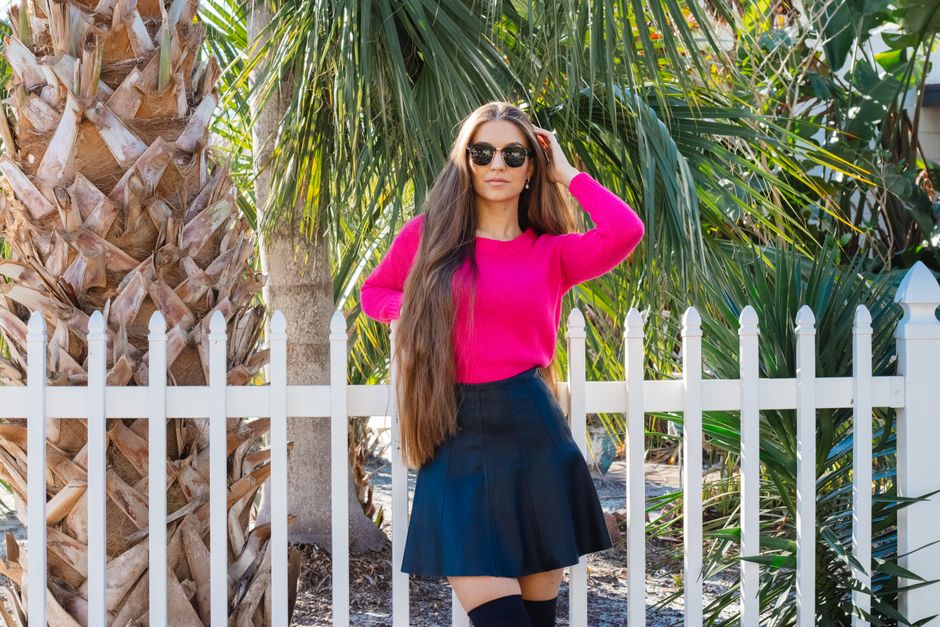
Jackets are where a summer dress becomes a fall outfit, but length decides if the result looks intentional. I use the jacket to control the waist and balance the hem, not just to add warmth.
For casual outfits, choose cropped denim
- Start with a midi dress and a cropped denim jacket. The jacket should end at the waist or just above the widest part of the skirt. A longer denim jacket can make a loose linen dress look boxy.
- Keep the jacket open so the dress remains the main vertical line. Push the sleeves up once or twice if the fabric is stiff.
- Use dark brown or black shoes to make the outfit feel more autumnal. White sneakers work only when the rest of the outfit has enough contrast.
The Levi’s Original Trucker Jacket, commonly priced around $98, is a reliable shape because its firm denim gives a soft linen dress some structure. It is the best casual layer for a relaxed midi or tiered dress.
For polished outfits, choose a shorter blazer
A fitted blazer works over a column-shaped linen dress or a dress with a narrow skirt. Choose wool, cotton twill, or a brushed fabric instead of another loose linen layer. Black, tobacco, navy, and gray all work better than bright white once the light changes.
Do not belt a blazer and a linen dress at the same time unless both pieces are slim. Two waistlines create visual clutter.
My verdict: pick cropped denim for daytime and a short structured blazer for work or dinner. A long, unstructured jacket is the weakest option because it hides the dress and adds bulk.
Pick Shoes and Hosiery That Ground Linen
Shoes tell people how to read the dress. The right pair makes linen look deliberate; the wrong pair leaves it stuck in July.
Should tights match the shoe?
For the cleanest line, match black tights with black boots. Use 40 to 60 denier tights for a visible fall texture without the heaviness of winter hosiery. Brown tights work with cognac, espresso, burgundy, and olive shoes, but only when the dress has a warm undertone.
Do not pair pale linen with a random gray tight and tan shoe. That combination often looks washed out. Repeat one color in the jacket, bag, or belt.
Are combat boots too heavy?
Not with the right hem. The Dr. Martens 1460 Smooth Leather Lace Up Boots cost $170 at full price and have the solid eight-eyelet shape that gives a floaty dress useful contrast. They work best with a midi that ends above the ankle boot or a mini worn with opaque tights.
For a softer outfit, choose a slim ankle boot with a pointed or almond toe. Tall riding boots suit button-front midis, but keep the skirt opening high enough to show a little boot shaft when you walk.
My verdict: black tights and a substantial ankle boot are the most dependable fall combination. They make the linen dress look grounded without forcing it into a winter outfit.
Three Fall Linen Outfits I Would Wear

These formulas solve different temperatures and dress shapes. I would not buy a new dress for each one.
Warm afternoon: dress plus cropped jacket
- Wear a flax or pale blue linen midi with a thin black tank underneath.
- Add a cropped denim jacket, a narrow leather belt, and loafers or low ankle boots.
- Choose a medium brown bag instead of a straw tote.
The Quince 100% European Linen Button Front Dress is a strong example of this base. It has a 45-inch midi length in size small, a removable belt, two functional pockets, and a listed price of $69 in 2026. Its button front also makes it easy to wear open over a slim base layer.
Cool morning: dress plus knit layer
- Use a sleeveless linen dress over a fitted mock neck.
- Add 40-denier tights and black ankle boots.
- Finish with a short wool coat or a jacket that stops at the waist.
This is where a darker dress works best. Navy, olive, chocolate, and charcoal hide wrinkles and make the thin base layer look planned.
Casual weekend: tiered dress plus boots
- Choose the UNIQLO Linen Blend Tiered Dress, listed at $49.90, in a dark neutral or muted stripe.
- Add a denim jacket and a wide, soft belt only if the dress has enough waist definition.
- Wear substantial boots, not delicate sandals.
My verdict: the first formula gives the most wear because it handles a wide temperature range and does not depend on a single trend.
Fix the Mistakes That Make Linen Look Summery
Most failed fall outfits are not caused by linen. They fail because every supporting piece repeats the same warm-weather signal.
Do not stack loose pieces
A loose linen maxi, an oversized cardigan, and a slouchy tote create one large shape with no clear waist or hem. Replace the cardigan with a cropped jacket, or replace the maxi with a straighter midi. Keep one piece relaxed and make the other piece precise.
Do not ignore transparency and wrinkles
White and pale linen can become awkward when layered over dark tights or a bulky base. Check the dress in daylight before wearing it outside. A half slip can solve transparency, but a thick full slip may create lines under the fabric. Linen will wrinkle, so steam the front panel and accept a few creases at the waist.
Know when to stop forcing the dress
Do not keep styling a beach cover-up as a fall dress. If the straps are too thin, the skirt is too sheer, or the fabric cannot support a layer, save it for warm weather. A cotton poplin, denim, or wool-blend dress is the better replacement once temperatures stay below 50 degrees.
My verdict: wear linen into fall only when the dress has enough coverage and structure for the layers you actually need.
The single most useful fall styling move is to keep the linen dress light and make the tights, shoes, and outer layer carry the season.